









Choosing between an industrial and consumer PC power supply is not simply a matter of comparing wattage or efficiency. Two PSUs may look similar on paper while being designed and validated for different operating environments and system requirements. Understanding these differences helps determine when a standard consumer PSU is sufficient and when an industrial-grade solution is the more appropriate choice.
What are the key differences between industrial and consumer PC power supplies?
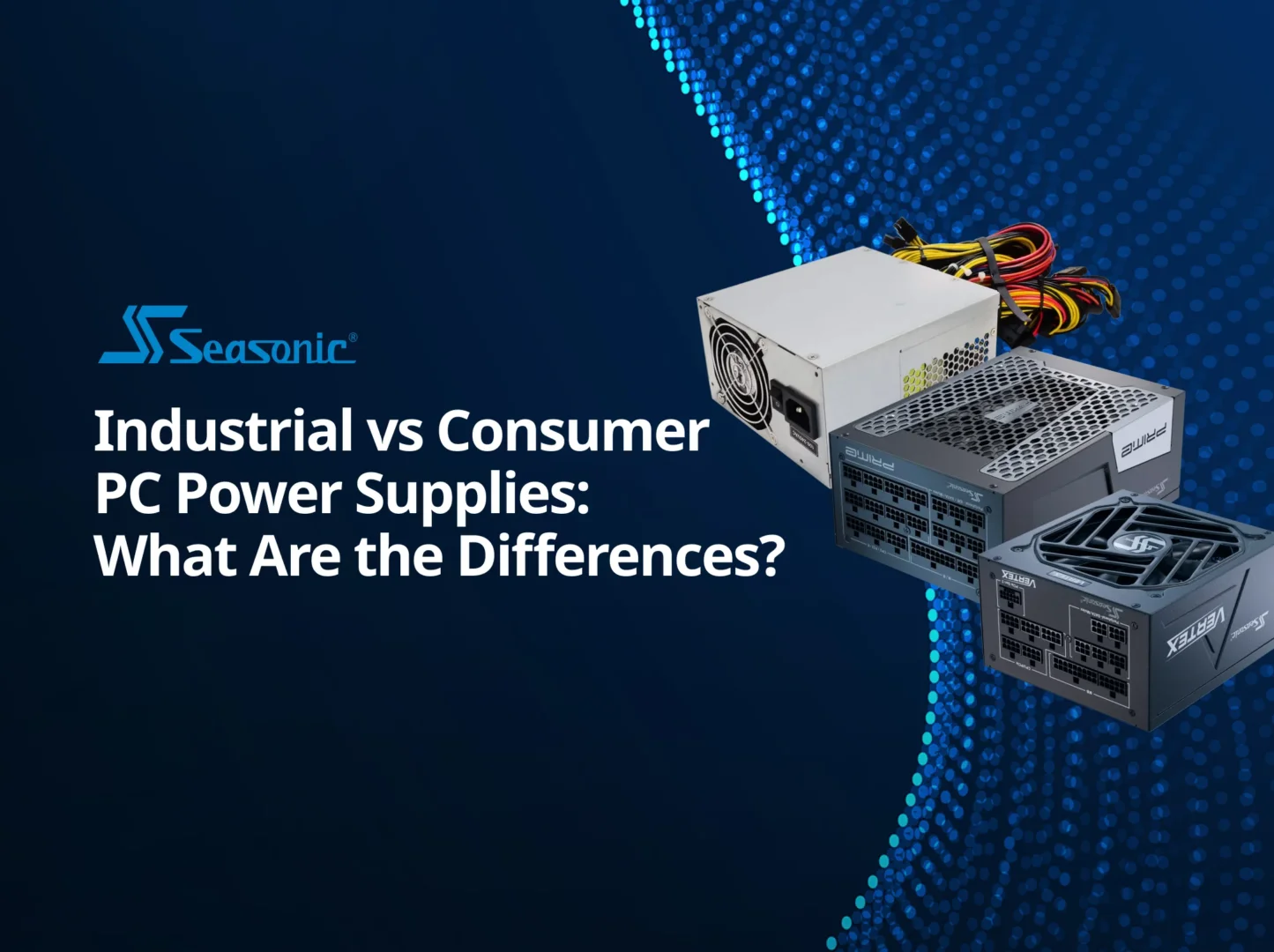
Industrial and consumer PC power supplies are built for different operating conditions and power demands, while doing the same job – delivering stable power and supplying the necessary voltages to the PC components. Their applications can overlap, but industrial customers often need a power supply tailored to specific equipment requirements, while consumer buyers typically choose from standard retail configurations.
Consumer PSUs are designed specifically for home, office, gaming PCs, and professional workstations. PC users pick them depending on the core system components they use (CPU and GPU models), form factor, noise level, and budget. Thus, these PSUs offer everything users need for convenient usage – detachable and custom PC power supply cables, silent or hybrid cooling, modern GPU power connectors, and an advanced set of electrical features. This segment includes both affordable solutions for everyday tasks and high-performance models for demanding games, rendering, and professional computing.
Industrial PSUs work with automation, monitoring, and communication systems, as well as other specialized equipment. The right model choice depends on the system it operates in and its electrical conditions. In this context, requirements for industrial PSU models may include continuous operation, elevated temperatures, resistance to vibration, or immunity to electromagnetic interference. The specific set of requirements depends on the application: power supplies for a production controller and a computer in a transportation system may require different designs.
Operating conditions and service life of industrial and consumer power supplies
Consumer power supplies are more often installed in desktop PCs used at home or in the office, so the load may vary from negligible to durable and intensive, depending on the workload. Industrial power supplies are selected or adapted to the requirements of the customer’s equipment. Some are based on consumer platforms with fewer convenience features, while others meet stricter requirements for continuous operation, temperature, vibration, or electromagnetic compatibility. The distinction lies in matching a specific application rather than universally exceeding consumer PSU specifications.
Every model has its own permissible operating conditions, and the service life must be assessed according to them.
Temperature levels are always set by the manufacturer, so specifications mainly differ based on where and how each model will be used. However, the ability to operate at high temperatures does not mean that the components will age as slowly as they would in a cooler environment. For electrolytic capacitors, temperature and additional heating caused by current ripple are important factors.
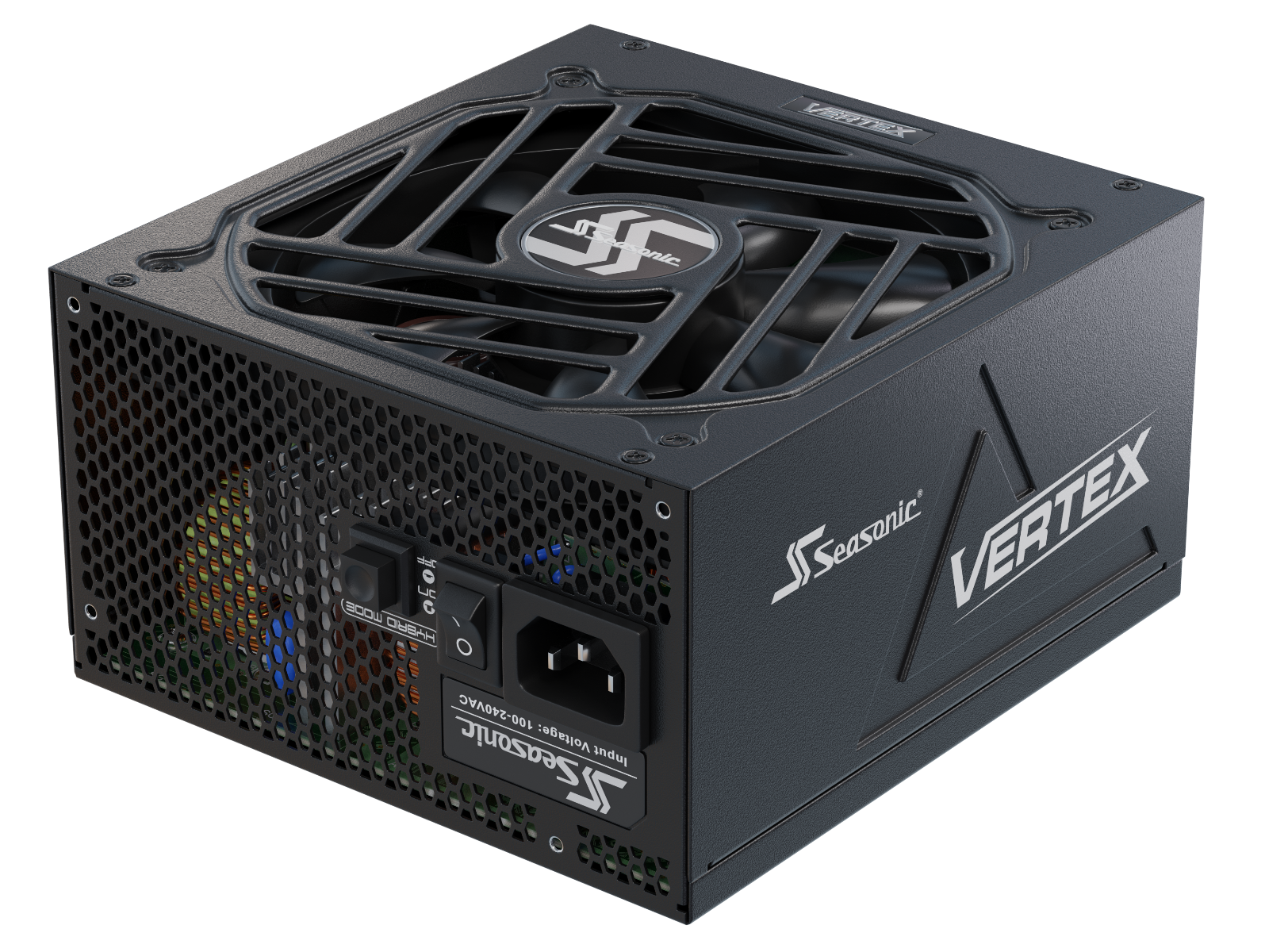
The MTBF (Mean Time Between Failures) indicator is another factor to consider for each PSU type. The industrial-grade Seasonic ATX JS is rated for over 100,000 hours at full load and 25 °C, excluding the fan. For the consumer-grade VERTEX PX, the specified MTBF is 100,000 hours at 25 °C, excluding the fan. This is a statistical measure of reliability, not a guaranteed service life for a specific unit. For both PSU types, actual service life depends on operating temperature, load, and cooling conditions. Similar MTBF ratings should therefore be considered in the context of the environments each model is designed to operate in.
The actual PSU longevity depends primarily on the components’ aging; concretely, the capacitors and the fan. For a home PC, proper ventilation and staying within the permissible load limits are of practical importance. For an industrial installation, it is also important to monitor temperatures in the fully assembled equipment and plan for maintenance.
There is no universal service life for all industrial or consumer power supplies; the forecast must be based on the specific model and its operating conditions.
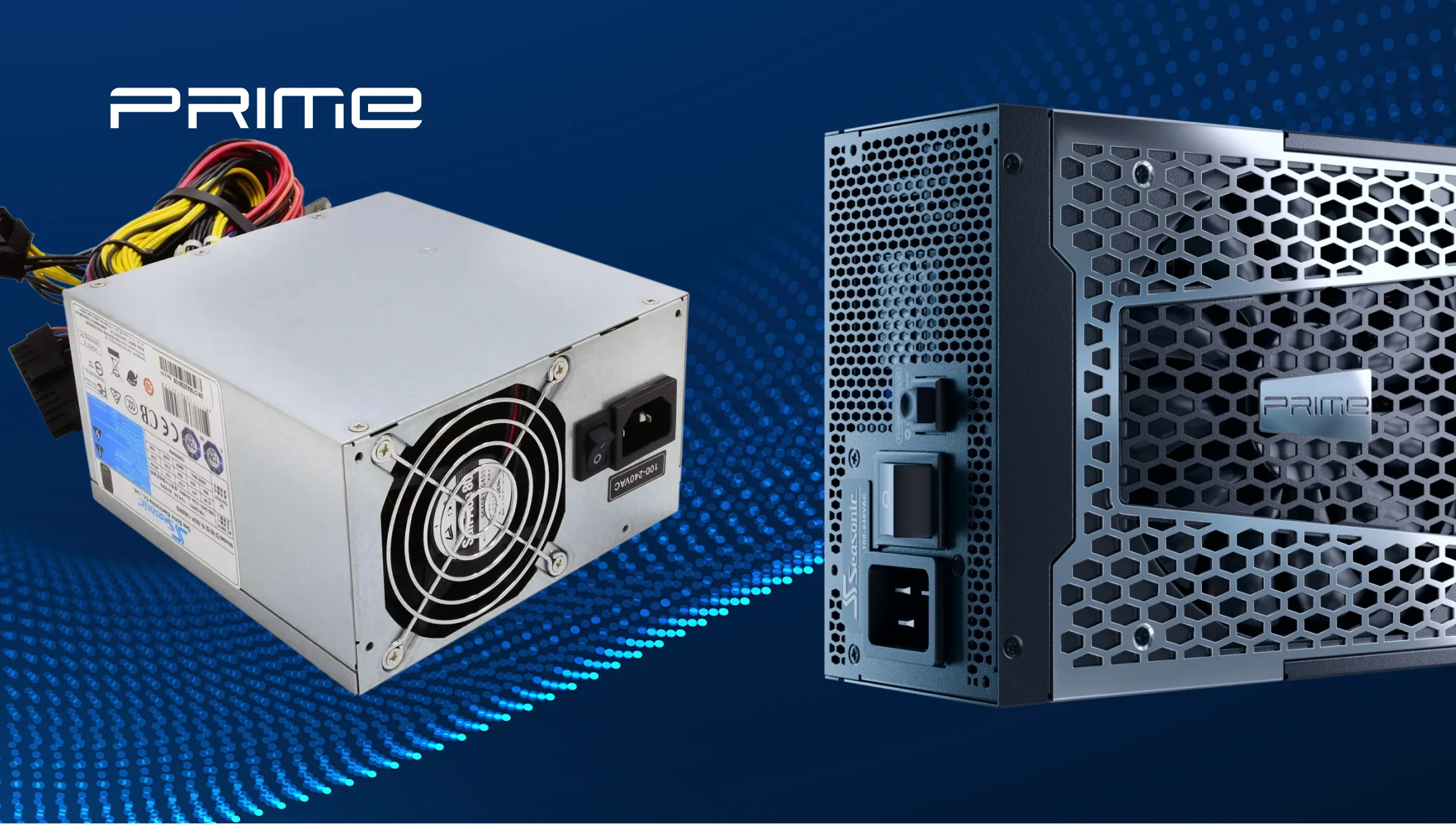
Thermal management and power stability in industrial and consumer systems
In consumer PCs, the PSU cooling is often configured to balance adequate heat dissipation with low noise levels. For example, the hybrid fan control in the Seasonic VERTEX PSUs allows the fan to remain off under certain conditions. The limits of this mode depend on temperature, load, and airflow within the case: as the need for cooling increases, the fan starts up.
In an industrial PC, the cooling system is designed to be compatible with the design of all equipment. It must account for available airflow, the location of heat sources, and the expected internal chassis temperature. For sealed systems, there are specially designed power supplies that dissipate heat through a metal base to the chassis or a heat sink. This cooling method must be incorporated into the design of the PSU itself.
Regardless of which category you choose, check for power derating: at high temperatures, available power can be lower than the rated power.
The stable power is evaluated based on the same basic parameters: output voltage deviations under various loads and input voltages, ripple, and response to sudden changes in power consumption. The transient response shows how much the voltage deviates and how quickly it recovers. To compare models, these characteristics are needed along with the rated power.
The OTP overheating protection also has a specific function in the context of thermal management and power stability. It shuts down the power supply when a preset temperature threshold is reached. If it triggers frequently, that’s a reason to check the system’s load and cooling.
Which standards and certifications matter for industrial and consumer power supplies?
One of the important safety standards for computer equipment is IEC 62368-1. It specifies measures to reduce the risk of electric shock, injury, and fire. For example, the Seasonic ATX JS industrial series meets the requirements of this standard.
The next standard applies to electromagnetic compatibility that encompasses both the interference generated by a device and its resistance to external influences. For home computers, the CISPR 32 Class B interference emission limits are important and are stricter than those for Class A. The letters denote equipment categories, not the quality of the equipment. For industrial equipment, IEC 61000-6-2 regarding immunity to interference may apply if there is no corresponding standard for a specific equipment category.
The ATX 3.1 standard specifies electrical parameters, connectors, and power-excursion requirements. For a consumer PC, this helps assess whether the power supply unit is compatible with the current platform. In an industrial system, the required ATX version and set of connectors are also compared with the requirements of the installed components.
80 PLUS® efficiency certification confirms compliance with efficiency and power factor requirements under specified test conditions. The rating is useful for both categories, but does not indicate the level of ripple or the service life. Separately, Cybenetics ETA evaluates energy efficiency, while LAMBDA evaluates acoustic noise.
The CE marking indicates the manufacturer’s declaration of conformity with applicable EU requirements. Therefore, check the declaration of conformity for a specific model: it specifies which regulatory requirements the manufacturer has applied.
The required list of standards depends on the market where the product is sold and the intended use of the equipment.
Seasonic industrial power supplies – solutions for industrial PCs
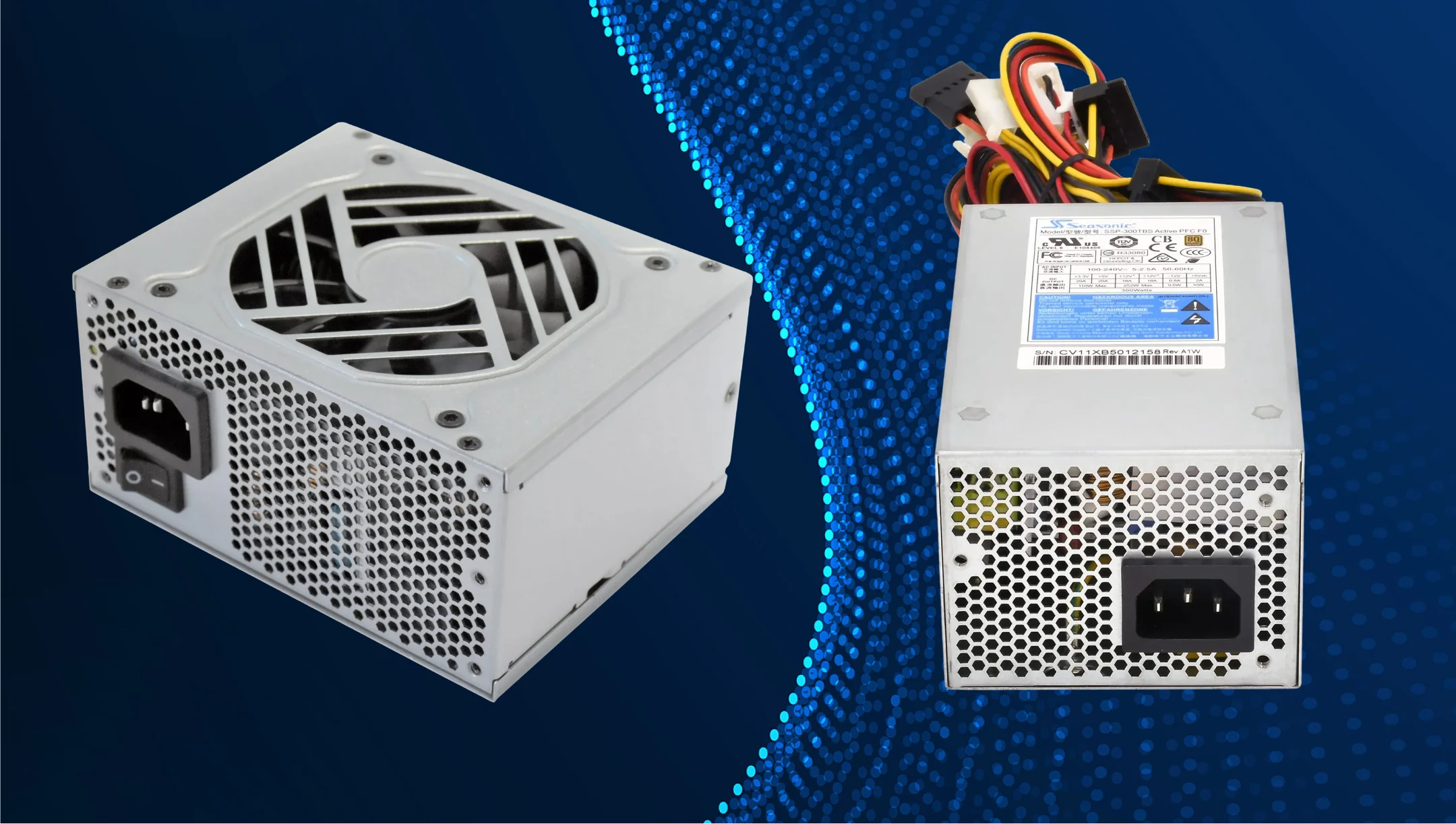
Seasonic industrial-grade PC power supplies are designed for embedded computers and server systems, while certain open-frame models are intended for ATMs, POS terminals, network equipment, and data storage systems.
Their practical benefit lies in the ability to integrate a ready-made power supply with the required electrical specifications and mounting configuration. During operation, electronic stabilization maintains the output voltages within the specified limits, while protective circuits respond to short circuits, overloads, and excessive output voltage.
The PSU lineup includes ATX, SFX, TFX, FlexATX, rack-mount, and open-frame power supplies. This selection allows you to match the power supply specifically to the equipment’s design: installation location, cooling, and component connection method.
When choosing industrial power supplies, compare each model within the series, as they are designed for specific workloads and electrical environments. For instance, the ATX RS offers higher power output in a full-size chassis, while the FLEX FCP allows the power supply to be installed in a compact chassis. The modular design of the SFX SFP/SFG, L1U, and L2U models allows you to use the appropriate set of cables based on your system configuration.
For a specific PC configuration, always check the available power capacity of each power rail, the compatibility of the connections, and the installation requirements.
In the table below, there are examples of Seasonic industrial PSUs with key technical details.
| Type and series | Wattage (W) | Effizienz | Key features |
|---|---|---|---|
| ATX RS | 1000, 850, 750, 650 | 80 PLUS® Gold | DC–DC conversion; 80 mm fan |
| SFX SFP/SFG | 750, 650, 550 | 80 PLUS® Platinum for 750 W; Gold for 650/550 W | Modular cabling; 92 mm FDB fan |
| TFX TGS | 300 | 80 PLUS® Gold | Fixed cables; 80 mm fan |
| FlexATX FLEX FCP | 650, 550 | 80 PLUS® Platinum | 40 mm fan; protections including OCP and OTP |
| 1U L1U | 500, 400 | 80 PLUS® Gold | Modular cabling; 40 mm fan |
| 2U L2U | 500, 400 | 80 PLUS® Gold | Modular cabling; 60 mm fan |
| Open Frame SSF-1501PS-12 | 150 | 85% efficiency | 12 V output; open-frame design |
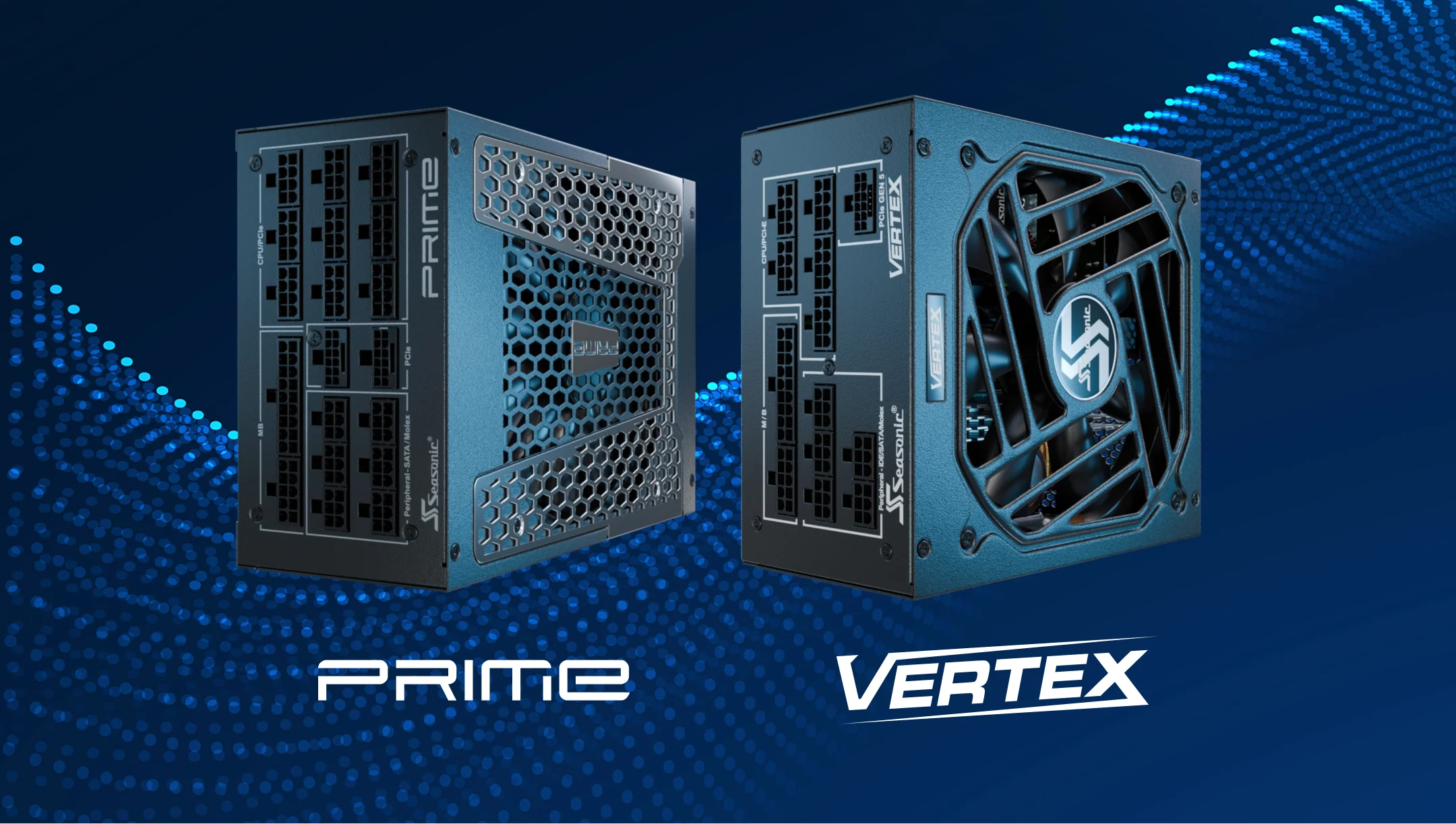
Seasonic consumer power supplies – PRIME and VERTEX for high-performance PCs and workstations
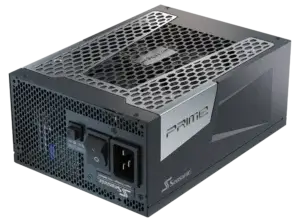
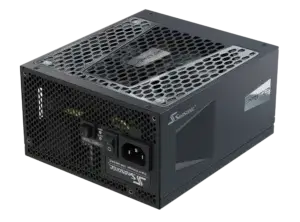
PRIME and VERTEX are Seasonic’s consumer-grade series designed for high-performance gaming PCs and workstations. Choosing between these two PSU series starts with the system’s power needs and available case space. PRIME offers options for particularly power-intensive configurations, including multi-GPU workstations, while VERTEX combines a shorter housing with wattage options suited to many gaming and content-creation builds.
In their ATX 3.1 versions, both series offer 12V-2×6 connectivity for compatible graphics cards and modular cables that simplify installation. Hybrid fan control can keep the fan off during lighter work when operating conditions allow. The practical choice comes down to sufficient power, suitable connectors, efficiency, and room for installation, not simply the highest wattage available.
Before choosing the PSU within the PRIME and VERTEX series, be sure to consider their dimensions. The PRIME TX ATX 3.1 is 210 mm long, while the VERTEX GX/PX ATX 3.1 is 160 mm long. This determines the available space for cables and adjacent case components.
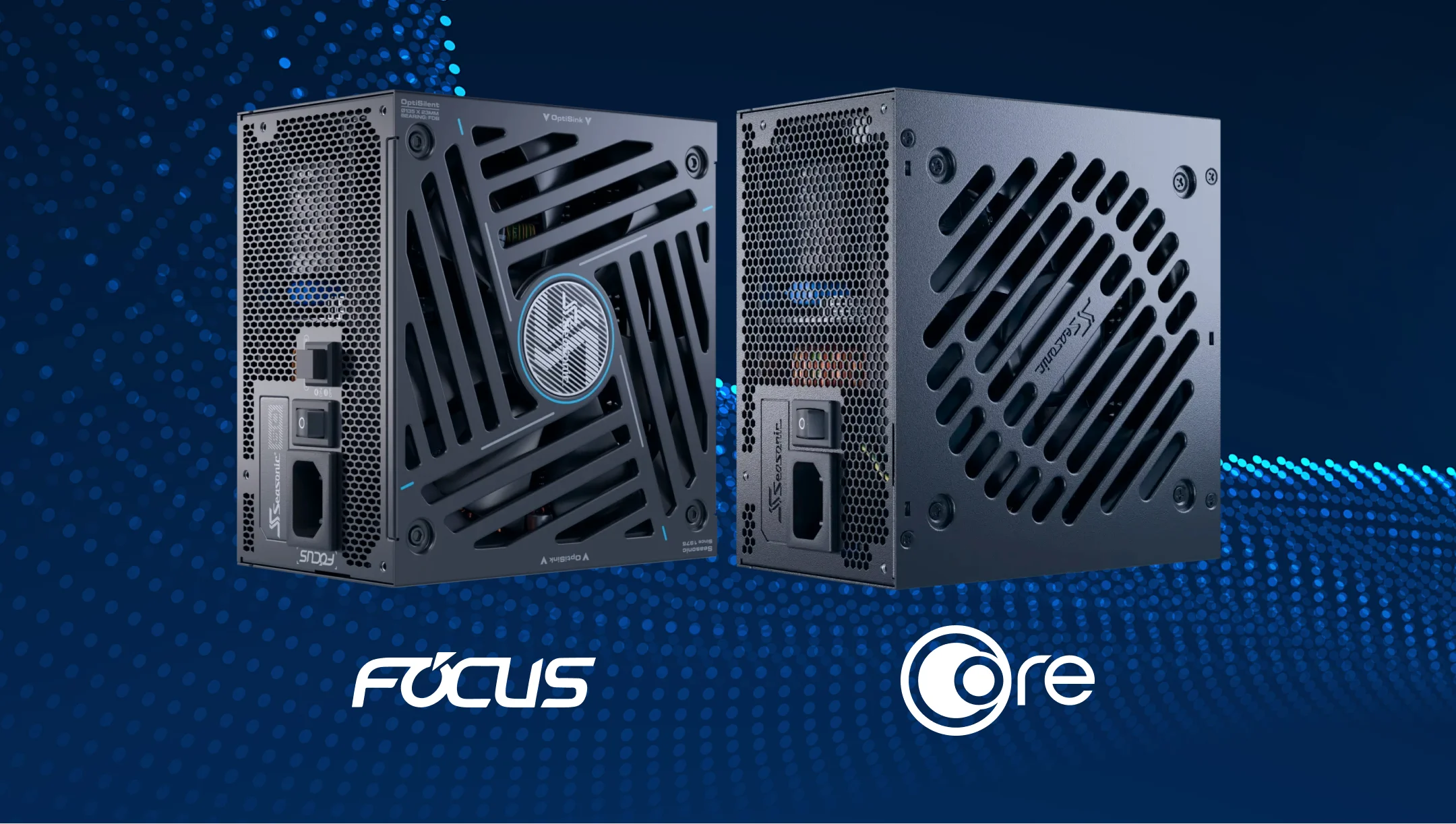
Seasonic FOCUS and CORE power supplies for mainstream and gaming PCs
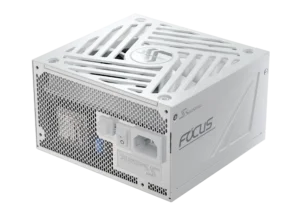
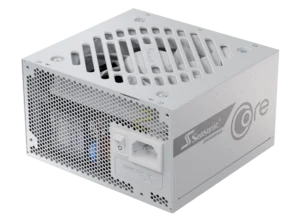
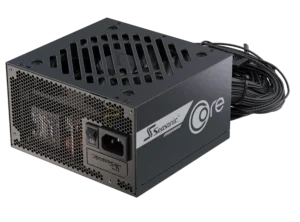
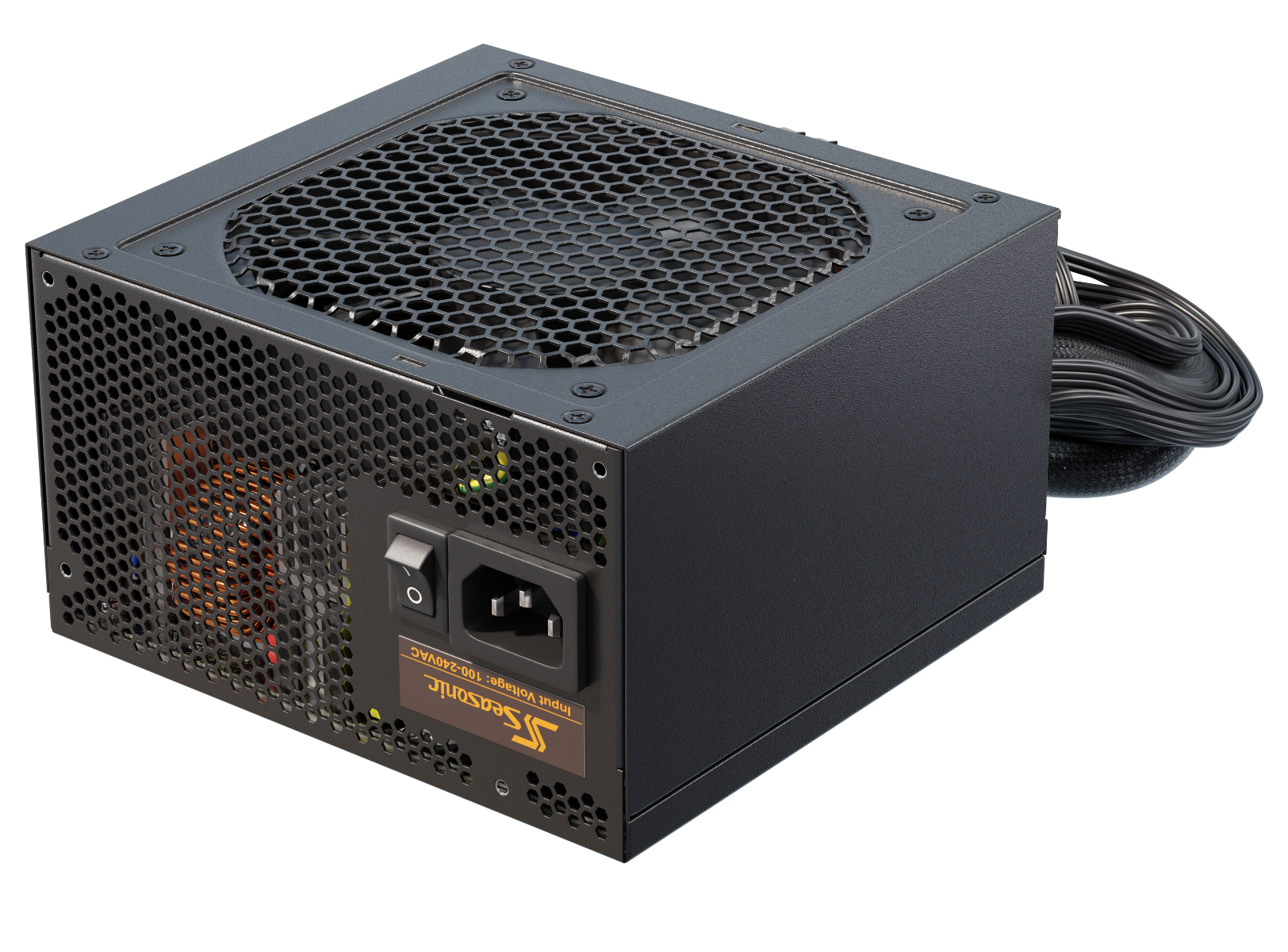
For everyday work and gaming, Seasonic FOCUS and CORE custom PC power supply series address different build priorities. CORE provides a foundation for mainstream and mid-range gaming PCs, helping users balance the PSU budget with spending on the CPU and graphics card.
FOCUS offers additional choices for builds where cooling, noise control, and efficiency receive more attention. Depending on the model, these include hybrid fan control and Gold- or Platinum-rated efficiency. Choose according to the actual configuration: required power and connectors first, followed by the acoustic features and efficiency level that matter for daily use.
Can you use a consumer PC power supply in an industrial system?
Yes, a consumer PSU can be used in some industrial systems, but only if its electrical, mechanical, thermal, and regulatory characteristics meet the requirements of the specific system. In a controlled environment, a standard, high-quality ATX PSU may be perfectly suitable. However, equipment that the manufacturer specifically designates for industrial use can involve additional testing steps. For example, the Seasonic ATX JS undergoes 100% burn-in, high-temperature cycling, and HiPot testing, and complies with IEC 62368-1.
Therefore, the main difference lies in whether the specifications of a particular PSU have been validated for the equipment’s specific operating conditions and requirements.
Abschluss
Industrial and consumer PC power supplies ultimately solve the same task, but the right choice depends on where and how the system will operate. Consumer PSUs are well suited to mainstream, gaming, and workstation builds in controlled environments, while industrial models can address specific validation, compliance, and operational requirements of industrial equipment. Instead of looking at the industrial or consumer label alone, the best approach is to match the PSU’s documented capabilities to the actual system demands.