


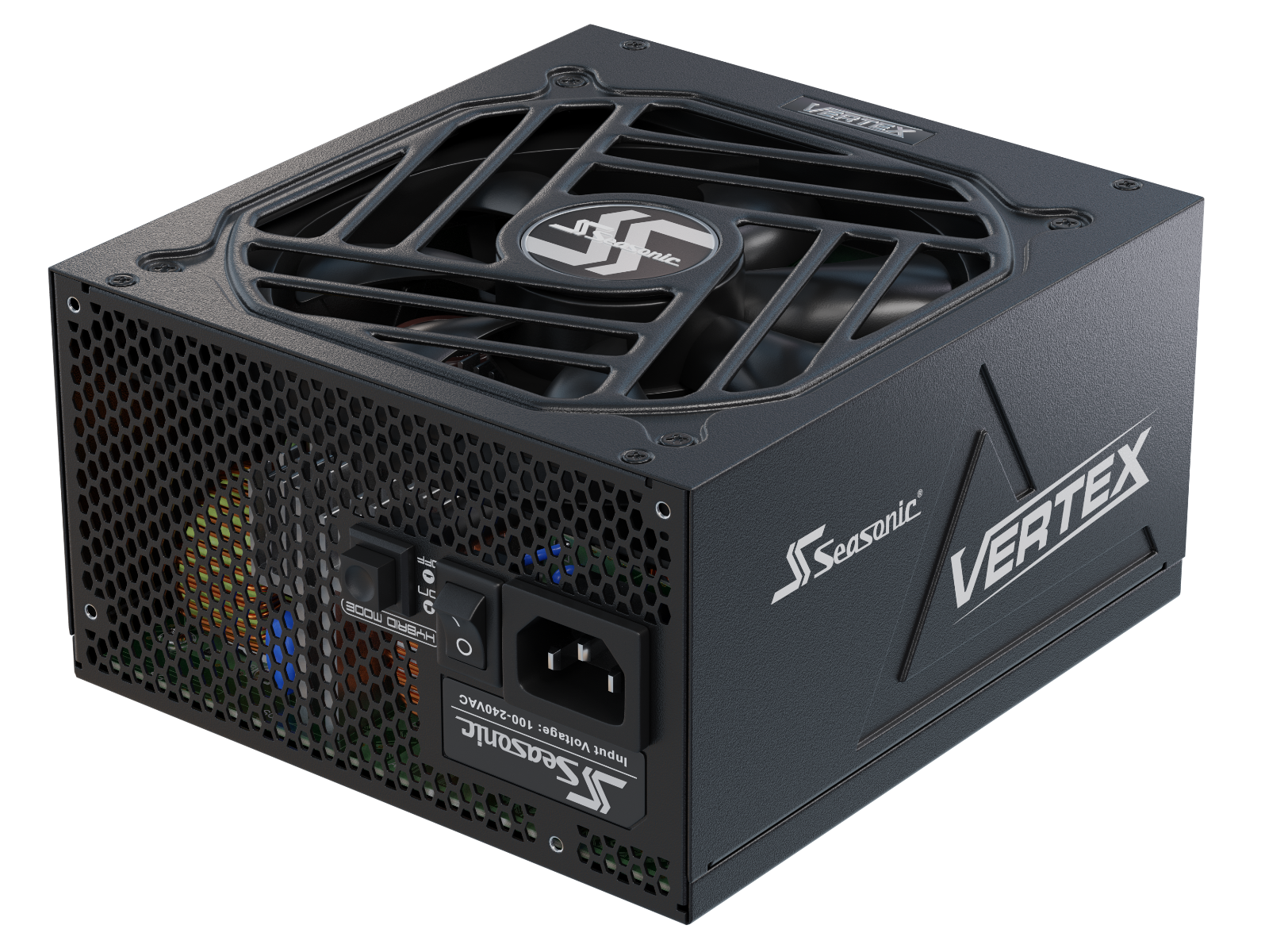


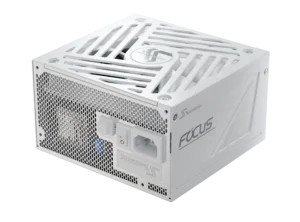


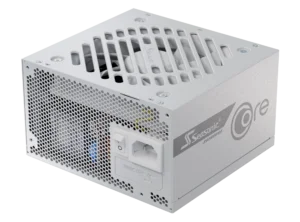



Whether you’re building a gaming PC or a workstation, your power supply needs to match the demands of your hardware. Here’s a closer look at the Seasonic FOCUS GX ATX 3.1 PSU, the design choices behind it, and what they mean for your build.
What is the FOCUS GX power supply?
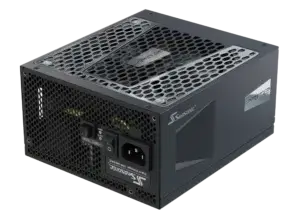
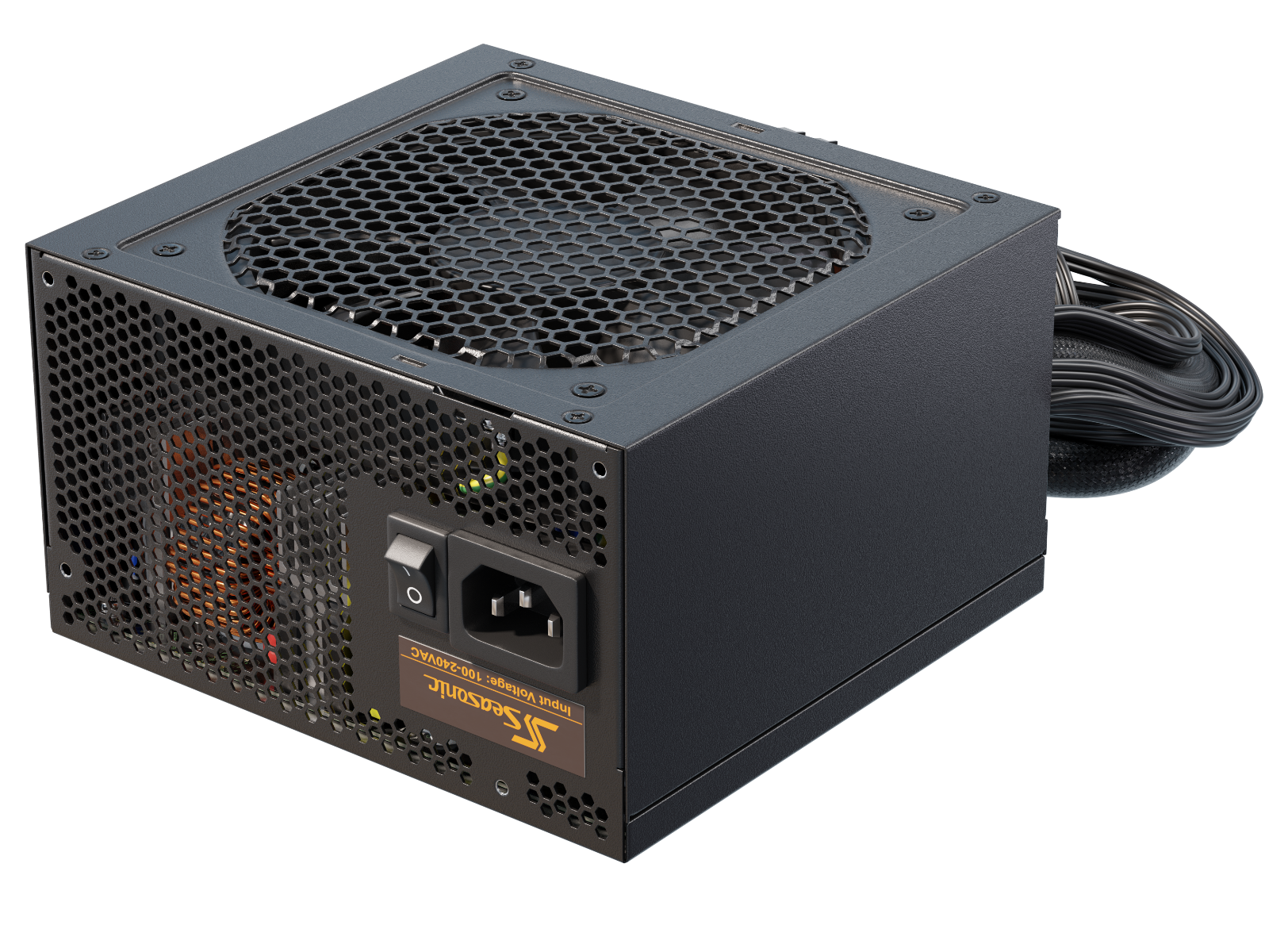
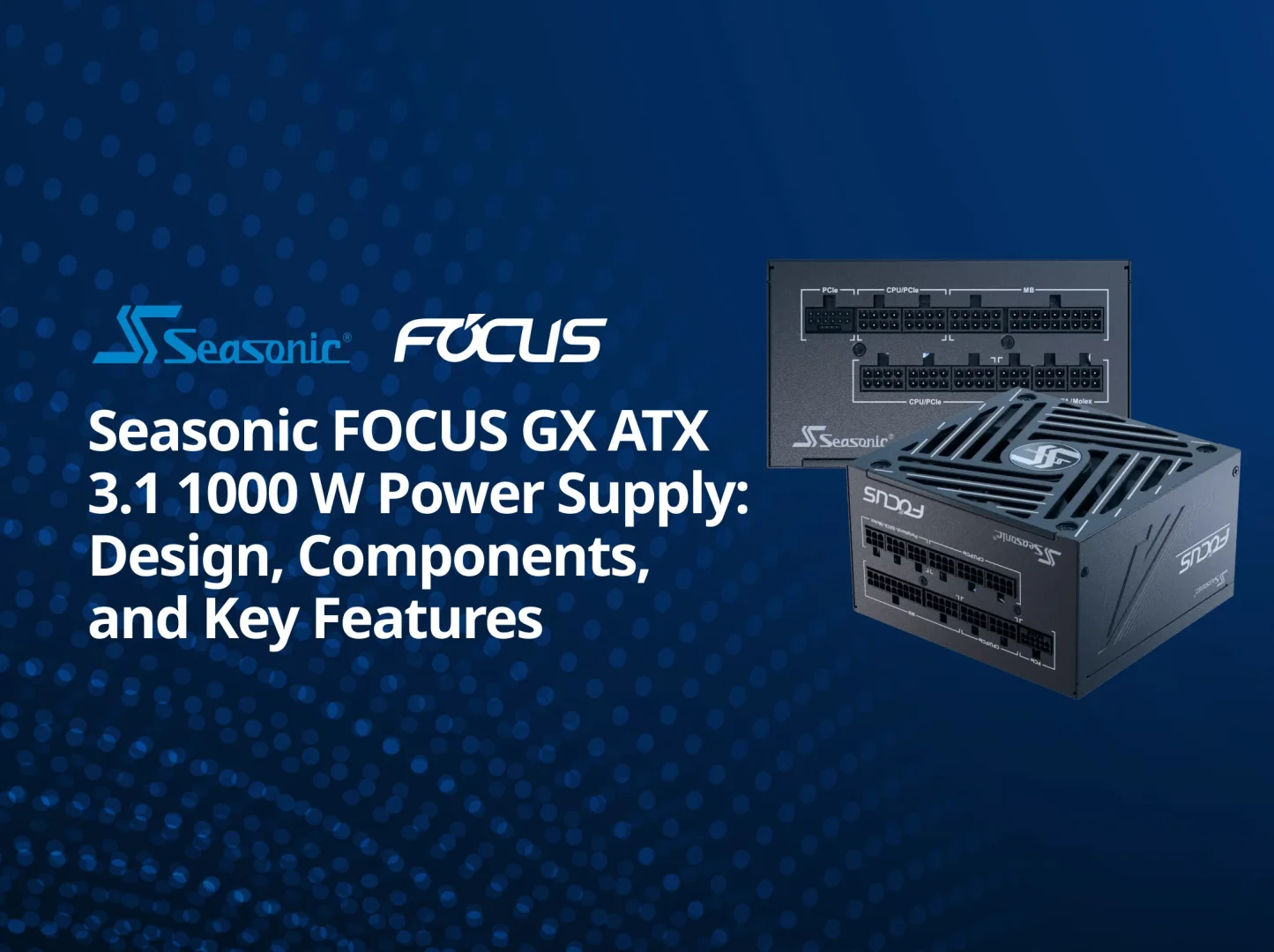
The FOCUS GX power supply is a high-performance PSU series from Seasonic for desktop PCs. The series is available in 750 W, 850 W, and 1000 W versions. It supports ATX 3.1 and PCIe 5.1 standards and comes with a native 12V-2×6 cable to power compatible graphics cards.
The power supply converts alternating current into direct current with a specific set of internal components. It features a compact case combined with the OptiSink™ heat dissipation system and digital fan control.
For this PSU, a 10-year manufacturer’s warranty is also included. It covers defects in materials and workmanship in accordance with Seasonic’s terms and conditions.
Seasonic also offers the newer FOCUS GX ATX 3.1 v5, which introduces OptiSilent fan control and a native dual-color 12V-2×6 cable. This article covers the preceding FOCUS GX ATX 3.1 generation.
We’ll provide a deeper Seasonic FOCUS GX overview, take a look at how these solutions work, what the 80 PLUS® Gold rating means, and which specifications to pay attention to.
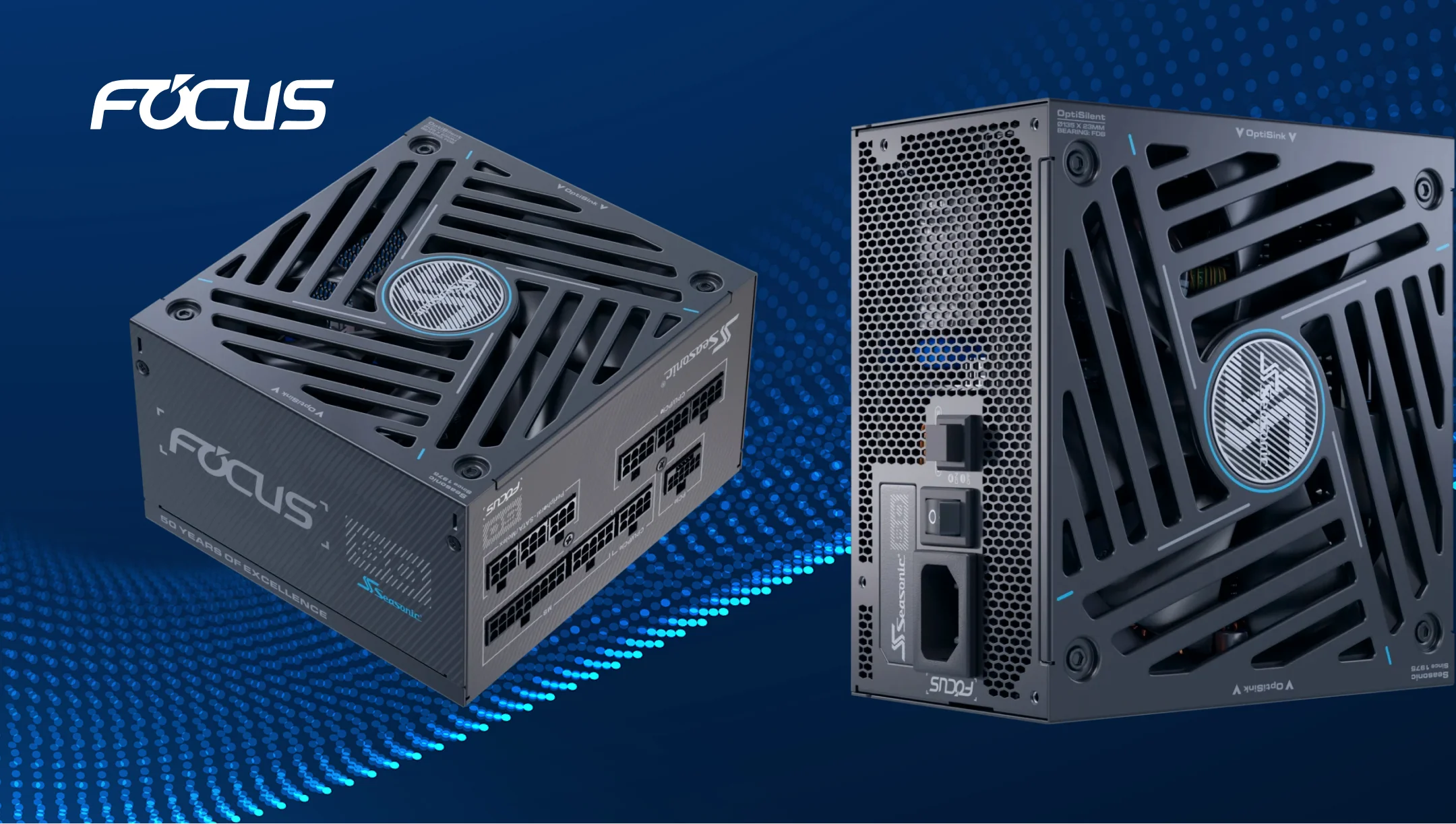
Seasonic 80 PLUS® Gold certification explained
80 PLUS® Gold certification describes the power supply unit’s energy efficiency under specified test conditions. For FOCUS GX White ATX 3.1, this level is specified by Seasonic on the official product specifications page. The efficiency rating shows how much of the electricity from the wall actually reaches your PC components. The rest is lost during conversion, mainly as heat.
The table shows the 80 PLUS® Gold certification minimum efficiency limits.
| Load based on power supply rating | 115 V Wewnętrzne, nieredundantne | 230 V EU Internal Non-Redundant |
|---|---|---|
| 20% | 87% | 90% |
| 50% | 90% | 92% |
| 100% | 87% | 89% |
These are standard requirements for a specific input voltage, not actual measurements from the PSU in your PC.
The FOCUS GX-1000’s 1000 W rating specifies the DC output power available to PC components. Its 80 PLUS® Gold certification describes conversion efficiency: the PSU draws additional power from the wall to cover the losses involved in converting AC power to DC. Voltage stabilization, cooling, and protective features are evaluated separately.
The 80 PLUS® program itself tests energy efficiency and doesn’t determine the PSU’s service life or its overall design quality. The FOCUS GX-1000 ATX 3.1 also has Cybenetics Gold efficiency and A− noise ratings. Its Cybenetics evaluation reports average efficiency of 90.93% and average noise of 28.22 dBA at 230 V across more than 1,450 load combinations. These figures describe the tested 1000 W model under laboratory conditions.
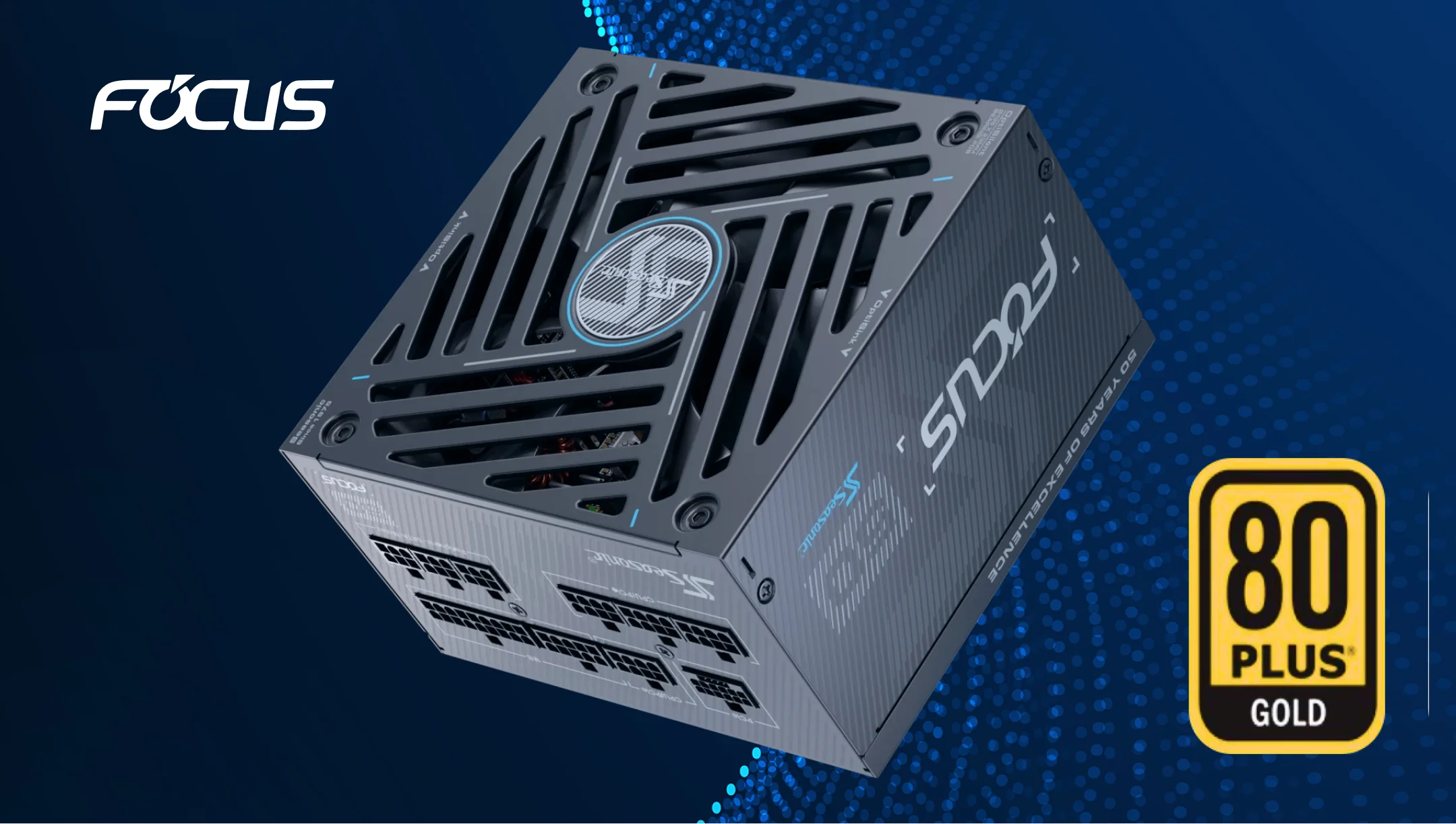
Design and build quality of the FOCUS GX power supply
The FOCUS GX ATX 3.1 PSU design combines a compact case (140 mm × 150 mm × 86 mm) with an OptiSink™ internal layout. The 140-mm length provides more flexibility for routing cables inside the PC case. However, you should check compatibility against the case’s specifications: even a compact ATX power supply isn’t suitable for every small system.
The Seasonic engineers made some adjustments in the FOCUS GX PSU design, where the main changes touch the OptiSink™ layout. They redesigned the printed circuit board, used smaller MOSFET power transistors and heat sinks, and implemented automated surface-mount technology. The updated design provides up to 48% more internal space available for airflow than the previous generation.
Thermal management is another important part of the PSU’s internal design. Heat from the power components is transferred along a carefully designed path to the cooling elements. MOSFETs and heat sinks are mounted directly onto the board using surface-mount technology. This reduces the reliance on manual fastening for thermal contact and frees up space for air circulation.
The assembly automation also helps ensure consistent build quality. Engineers describe it as a way to minimize variations associated with manual component installation. Thus, the build quality here can be attributed to specific design choices: the PCB layout, the assembly method, and the heat dissipation design.
Key components of FOCUS GX: modular cable system
The fully modular cable system in the FOCUS GX design allows PC users to connect only the cables required for their configuration. Unnecessary cables can simply be left out, which keeps extra cables away from storage drives and other components. For compact builds, this is a practical advantage.
The table below lists the cable connectors provided for the components of FOCUS GX ATX 3.1 setups, broken down by model.
| Connections | 1000 W | 850 W | 750 W |
|---|---|---|---|
| Motherboard, ATX 24/20-pin | 1 | 1 | 1 |
| CPU power, EPS/ATX12V 8/4-pin | 2 | 2 | 2 |
| Graphics card, PCIe 8/6-pin | 3 | 3 | 2 |
| Graphics card, 12V-2×6 | 1 | 1 | 1 |
| SATA | 8 | 8 | 8 |
| Peripherals, 4-pin | 3 | 3 | 3 |
Important: The table lists the number of connectors, not cables. In other words, several SATA or peripheral connectors may be located on a single cable. Before assembling the system, you should compare the available connections with the requirements of the motherboard, graphics card, and storage devices.
Modularity itself doesn’t always mean universal cable compatibility. The fact that the plug on the power supply side has the same shape does not guarantee that the electrical contacts are arranged in the same way. To replace a cable, you must verify the exact model and type of cable using Seasonic’s official compatibility chart.
The easiest option when installing a new FOCUS GX is to use the cables that come with it. At Seasonic, we recommend this approach, since cables from another manufacturer or an incompatible series may have a different pinout.
FOCUS GX power components: capacitors, circuitry and protections
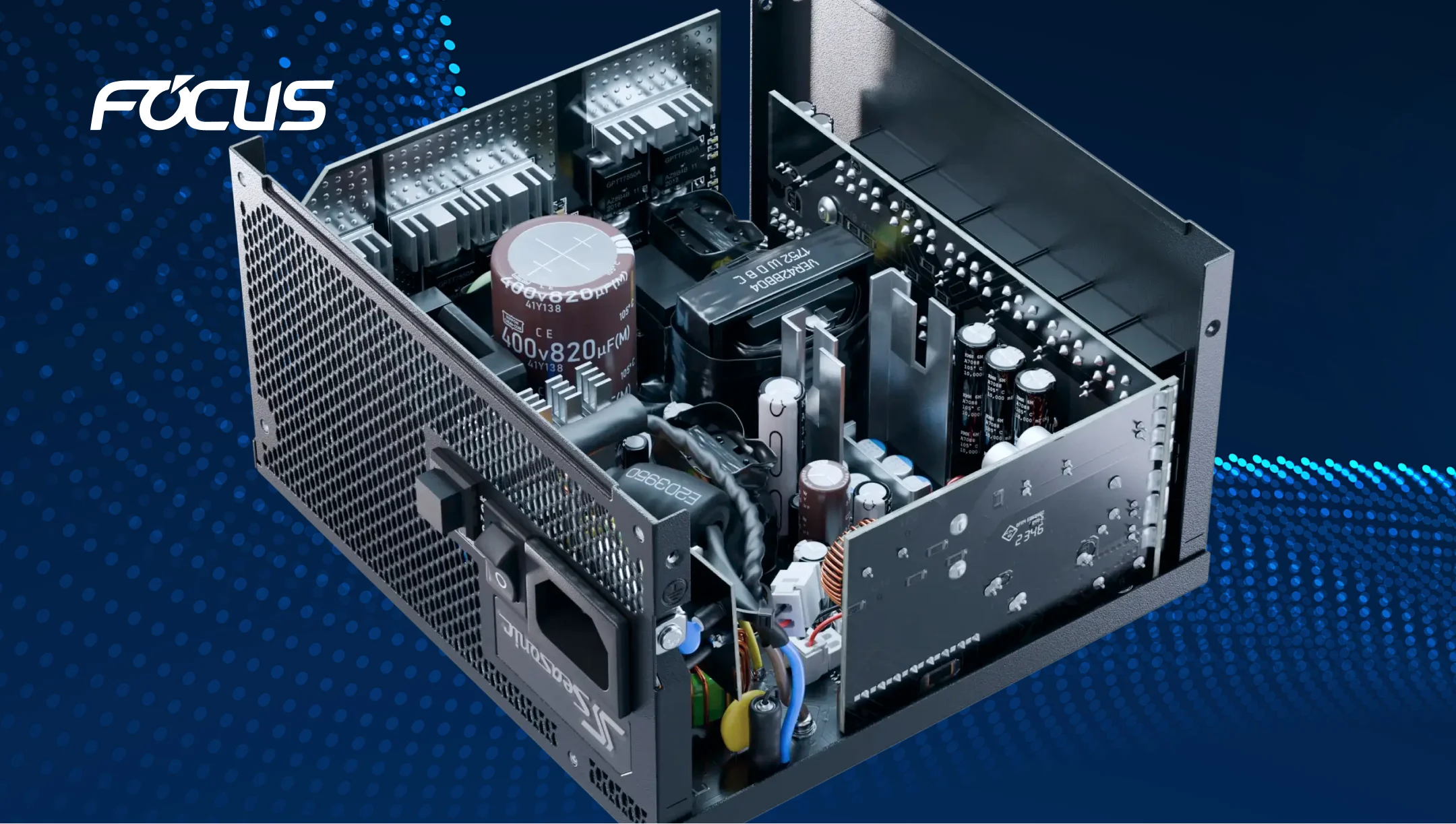
The FOCUS GX ATX 3.1 uses Japanese aluminum electrolytic capacitors with a temperature rating of 105 °C. This rating describes the temperature class of the relevant components and doesn’t mean that the entire power supply must be operated at that temperature.
The capacitors operate as part of the power conversion and filtering circuit. Electrical performance is also influenced by power transistors, transformers, chokes, and the layout of components on the board. Therefore, power supply quality is assessed based on the performance of the entire circuit: how well it maintains the required voltages and limits unwanted electrical fluctuations.
In addition to the conversion components, the FOCUS GX features six protection functions. Their abbreviations denote specific situations that the unit monitors:
OCP – overcurrent.
OVP – excessive increase in output voltage.
UVP – drop in output voltage below the set threshold.
OPP – power overload.
SCP – short circuit.
OTP – overheating.
When a monitored parameter exceeds the set limits, the corresponding protection mechanism may shut down the power supply. This explains why evaluating electronics isn’t limited to the origin of the capacitors: current, voltage, and temperature control, as well as the response to fault conditions, are also important.
For the power components used in our FOCUS platforms, we also test PSU performance under different loads, temperatures, and short-term power changes. These tests complement the selection of components with specified electrical and thermal characteristics.
Cooling and fan control in FOCUS GX-1000 ATX 3.1
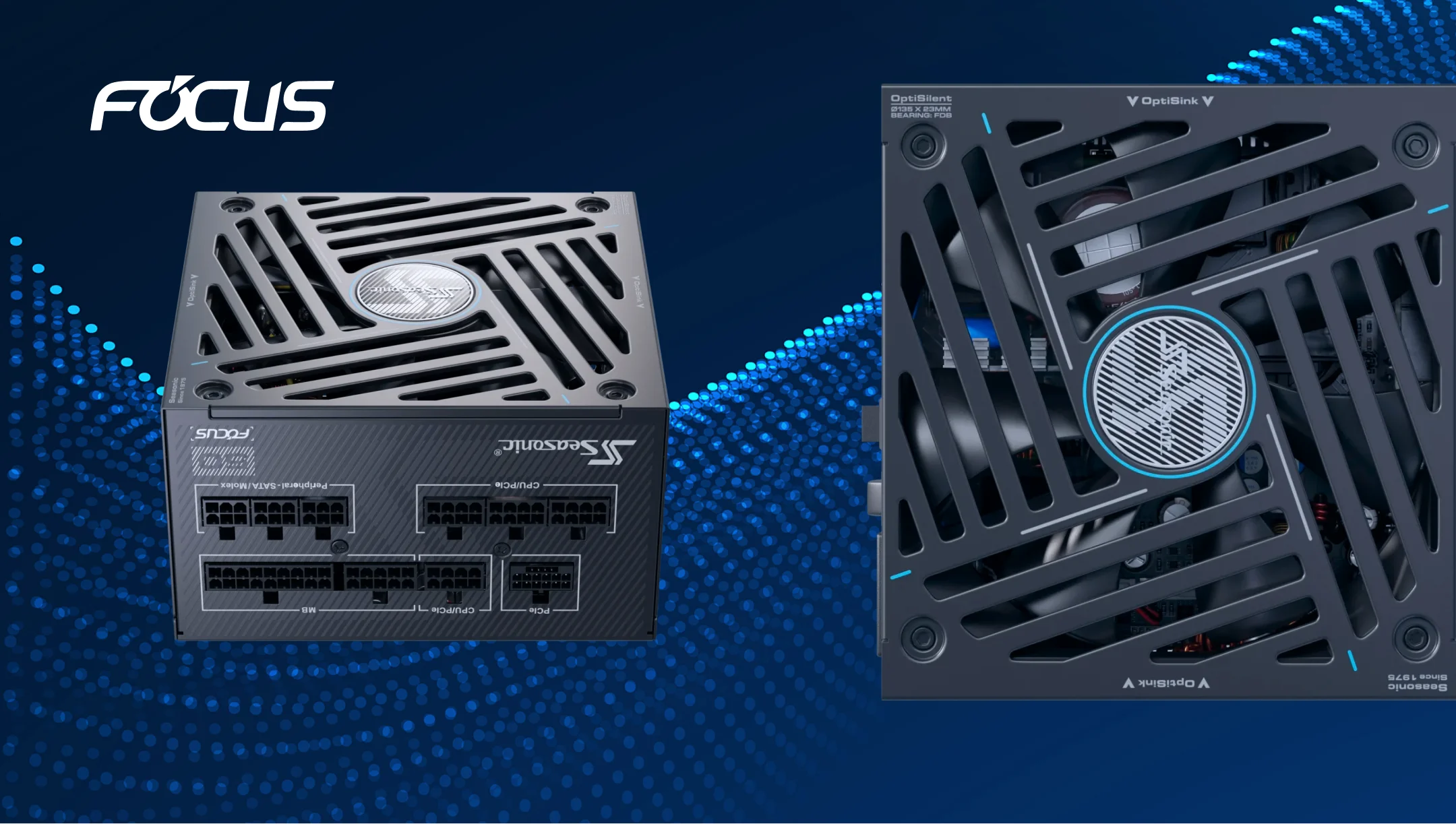
The FOCUS GX-1000 ATX 3.1 is equipped with a 135-mm fan featuring a Fluid Dynamic Bearing (FDB) and a Digital Hybrid Fan Control system. There are three modes for this model: Fanless Mode, Silent Mode, and Cooling Mode.
Fan behavior may vary depending on system heat generation and case ventilation. Fanless Mode should not be interpreted as a guarantee that the fan will remain off during any light-load task: active cooling kicks in when needed.
The fan itself is only part of the cooling system. The OptiSink™ design helps air flow through the unit’s interior and dissipate heat from the power components. Therefore, the result depends simultaneously on the thermal contact between components, their placement, and airflow.
During installation, it’s important to keep the ventilation openings clear and take the PC case design into account. In a compact build, you still need enough space for airflow and cable management, even with automatic fan control.
ATX 3.1 compatibility and GPU power delivery
ATX 3.1 support in the FOCUS GX mainly refers to how the PSU handles sudden changes in power demand. A modern graphics card may draw more power for a very brief period than it does under a steady load, so average power consumption alone is insufficient to fully assess power delivery requirements.
Intel’s ATX 3.1 power-excursion requirements specify that PSUs rated above 450 W with a 12V-2×6 connector must handle brief excursions to 200% of their rated output for 100 microseconds under the applicable test conditions, including a 5% testing duty cycle. For a 1000 W PSU, this corresponds to a brief 2000 W test load. Its continuous output rating remains 1000 W, so the PSU must still be sized for the full system.
A bundled native 12V-2×6 cable is used in the FOCUS GX PSU to connect a compatible GPU. For this native cable, the specified power rating is up to 600 W. This is the cable’s maximum power rating; actual power consumption is determined by the graphics card, while the CPU and other components also draw power from the power supply.
The 12V-2×6 revision introduces longer power pins and shorter sense pins in the board-mounted header on the GPU or PSU. These changes apply to the hardware header, not the cable plug, and allow the power contacts to engage before the sense contacts. The connector’s mating interface and pinout are retained, preserving backward compatibility with 12VHPWR.
During installation, both ends of the cable must be fully inserted and secured. Do not create tension or a sharp bend near the connector. The total power capacity of the PSU must be verified in accordance with the graphics card manufacturer’s recommendations.
Power ratings and efficiency explained
To evaluate FOCUS GX under load, look at output power, voltage regulation, and efficiency as separate factors. These characteristics answer different questions: how much power is available to the components, how accurately voltages are maintained, and what losses occur during conversion.
For the FOCUS GX-1000, the technical data sheet specifies a total continuous output power of 1000 W. The +12 V rail has a rating of 83 A, or 996 W. For the +3.3 V and +5 V rails, a combined limit of 125 W is set. These maximum values are not added to the 1000 W rating. The total simultaneous load is still limited to the PSU’s overall output.
A simple calculation illustrates the difference between output and power drawn from the outlet. If components draw 500 W and the efficiency at this operating point is 90%, the input power is approximately 556 W: 500 ÷ 0.90. About 56 W is lost. This is a hypothetical calculation example, not the result of specific testing of the FOCUS GX-1000.
In practice, the rated power should be considered in relation to the entire PC configuration. The PSU’s maximum wattage doesn’t mean your PC uses that much power all the time. Actual power draw changes depending on how hard the components are working.
Wniosek
Choose the FOCUS GX ATX 3.1 if you want an easy install, cleaner cable management, and reliable power for a modern gaming PC or workstation. Its native GPU cable connects directly to compatible graphics cards, while the compact, fully modular design makes cable routing easier. Pick the model that fully matches your system’s power and connector needs, including any upgrades you may add later.