


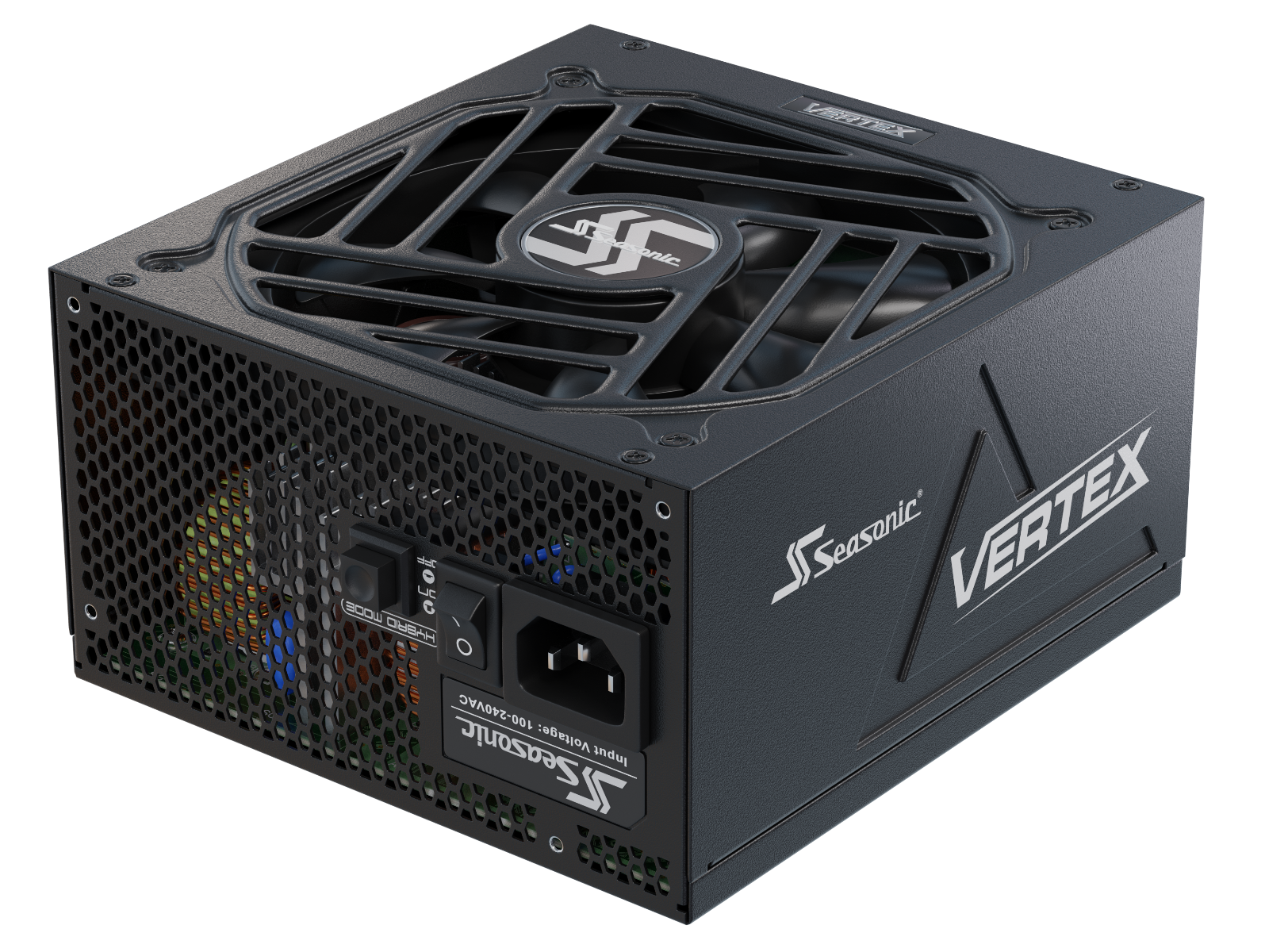


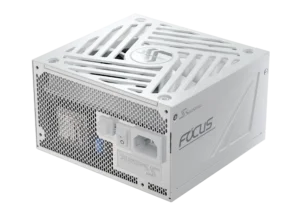


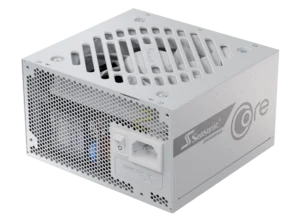
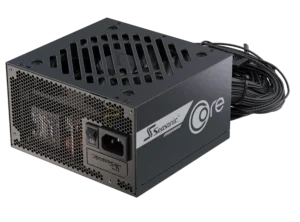
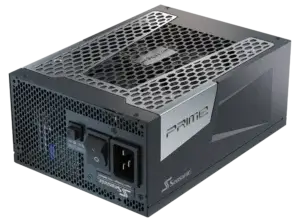
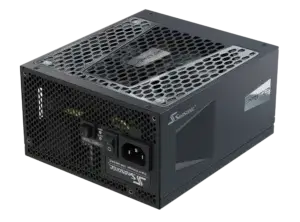


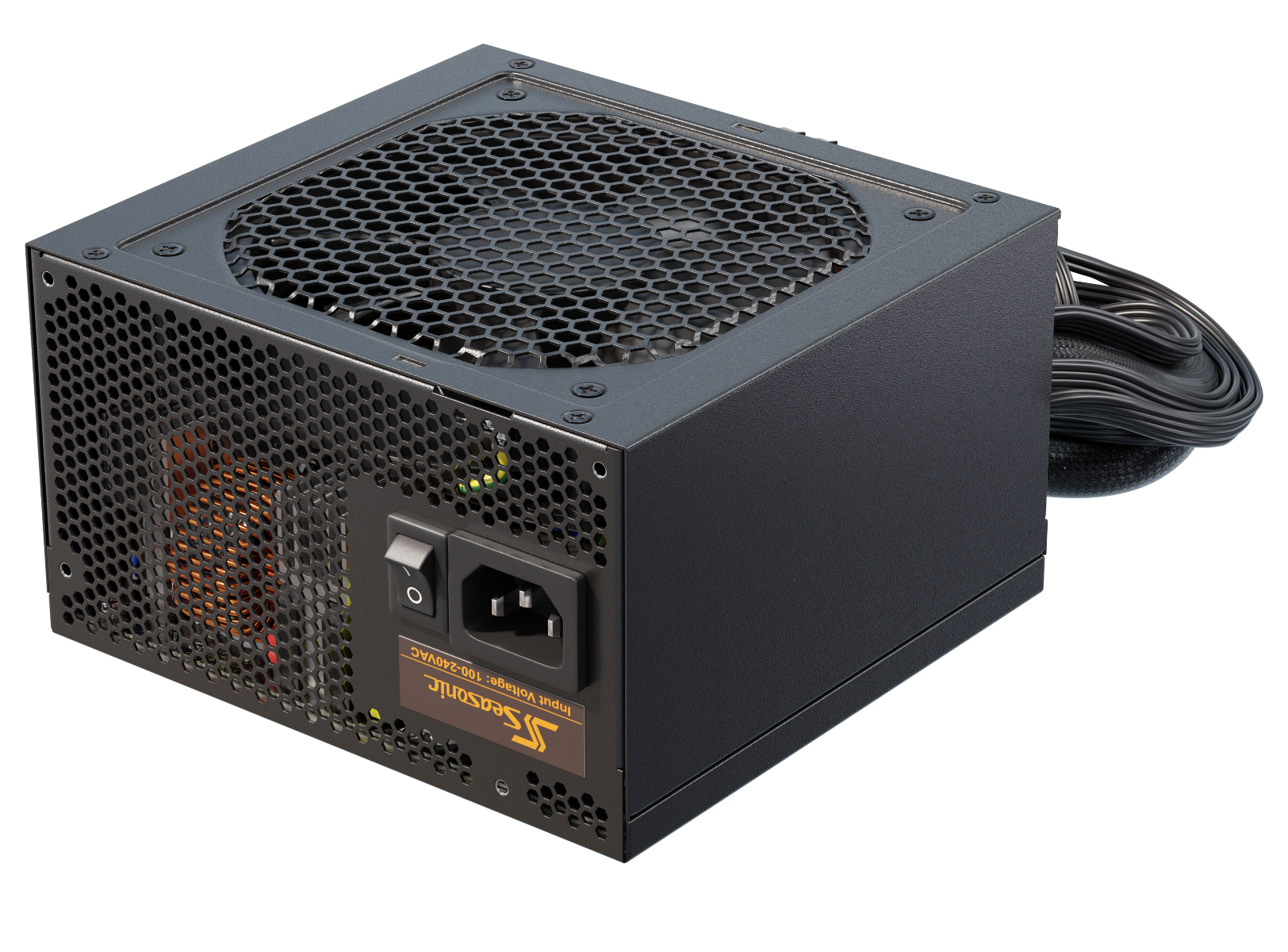
Wydajność zawsze była głównym celem przy projektowaniu zasilaczy, gdyż straty powstające podczas przetwarzania energii elektrycznej oznaczają dodatkowe koszty.
Siła wielkich liczb
In 2004, the US EPA’s ENERGY STAR programme estimated around 10 billion power supplies in use worldwide — across computers, servers, printers, televisions, phones and more.
Efficiency back then was poor. The same assessment found many designs converting only 30 to 60% of the power they drew, and the prevailing industry design guide for PC power supplies required just 70% efficiency at 50% load.
Certified designs today are in a different class. 80 PLUS® Titanium requires 94% at 50% load on 115 V, and the newer Ruby tier 95%. Cybenetics Diamond, which averages efficiency across the full load range rather than fixed points, requires 95% or higher on 230 V. Seasonic’s PRIME ENTERPRISE RX-1600 is the first ATX power supply certified 80 PLUS® Ruby at 115 V and 230 V.
The historical 70% design-guide requirement and today’s 95% Ruby certification threshold illustrate the difference between those requirements at 50% load. They do not represent the average efficiency of all power supplies in use. For the same DC output power, a more efficient power supply draws less electricity from the wall and loses less energy as heat.
Historia certyfikatów
Until the early 2000s, power supplies had no efficiency certification, and it was not until 2004 that the first initiative to create an efficiency standard emerged.
The 80 PLUS® program was created in 2004 by Ecos Consulting, an energy efficiency firm, and is today administered by CLEAResult, which acquired the program through Ecos’s successor company.
Sea Sonic partnered with Ecos Consulting at the time to work out uniform efficiency standards, and in 2005 became the first manufacturer to bring the world’s first 80 PLUS® certified PC power supply to market (the Seasonic SS-400HT). Since then, 80 PLUS® certified power supplies have become a de facto component in PC systems.
Zrozumienie efektywności
Certyfikacja efektywności energetycznej pozwala konsumentom dowiedzieć się, jak wydajny jest zasilacz.
Procentową wartość sprawności uzyskuje się, dzieląc moc wyjściową przez moc wejściową; im wyższa ta wartość, tym bardziej wydajny jest zasilacz. Moc wejściowa tracona podczas konwersji jest przekształcana w ciepło.
Higher-efficiency power supplies often require more advanced designs and components. However, an 80 PLUS® rating specifically certifies energy efficiency, not overall build quality. During certification, the power supply is tested at several load levels, including 100% of its rated output, to verify its efficiency under the defined test conditions.
Cybenetics
Cybenetics to firma zajmująca się testowaniem i certyfikacją sprzętu komputerowego. Powstała z zamiarem zrewolucjonizowania sposobu testowania i porównywania zasilaczy, aby zapewnić użytkownikom końcowym jaśniejszy obraz produktów zasilających, które kupują do swoich systemów.
Znaczenie pomiarów
The basic test methodology is that Cybenetics doesn’t take only three or four measurements to define the efficiency or noise output of a PSU. Instead, Cybenetics applies more than 1,450 different load combinations, from minimal to full load, and calculates the average efficiency and noise readings that determine the PSU’s efficiency and noise ratings.
This provides Seasonic with a complete operational map of the PSU, allowing us to evaluate not only efficiency and noise, but also voltage regulation, ripple, and other important performance data.
| Poziomy sprawności (wejścia 115 V) | Wydajność (1) (2) | Pf (3) | Sprawność 5Vsb (1) (3) (4) | Moc wampira (3) |
|---|---|---|---|---|
 Diament Diament | ≥93% overall efficiency | ≥0.985 | >79% | <0.10 W |
 Titanium Titanium | ≥91% & <93% overall efficiency | ≥0.980 | >77% | <0.13 W |
 Platinum Platinum | ≥89% & <91% overall efficiency | ≥0.975 | >76% | <0.16 W |
 Gold Gold | ≥87% & <89% overall efficiency | ≥0.970 | >75% | <0.19 W |
 Srebrny Srebrny | ≥85% & <87% overall efficiency | ≥0.960 | >73% | <0.22 W |
 Brązowy Brązowy | ≥82% & <85% overall efficiency | ≥0.950 | >71% | <0.25 W |
| Efficiency Levels (230V inputs) | Wydajność (1) (2) | Pf (3) | Sprawność 5Vsb (1) (3) (4) | Moc wampira (3) |
|---|---|---|---|---|
| Diament | ≥95% overall efficiency | ≥0.950 | >78% | <0.12 W |
| Titanium | ≥93% & <95% overall efficiency | ≥0.940 | >76% | <0.15 W |
| Platinum | ≥91% & <93% overall efficiency | ≥0.935 | >75% | <0.18 W |
| Gold | ≥89% & <91% overall efficiency | ≥0.930 | >74% | <0.20 W |
| Srebrny | ≥87% & <89% overall efficiency | ≥0.920 | >72% | <0.23 W |
| Brązowy | ≥84% & <87% overall efficiency | ≥0.910 | >70% | <0.25 W |
Cybenetics wykorzystuje kompleksową i nowoczesną metodologię
- Measurements across a wide range of load combinations
- High ambient temperature
- Pomiary 5VSB
- Pomiary mocy wampirów
- Nowoczesne raporty sprzętu
- Prawidłowe odznaki wydajności
80 PLUS ®
80 PLUS® offers seven different efficiency certifications
| 80 PLUS Orzecznictwo | 115 V Wewnętrzne, nieredundantne | ||||
|---|---|---|---|---|---|
| 80 PLUS Orzecznictwo | 5% | 10% | 20% | 50% | 100% |
 80 PLUS 80 PLUS | - | - | 80% | 80% | 80% PFC ≥ 0.90 |
 80 PLUS Brązowy 80 PLUS Brązowy | - | - | 82% | 85% PFC ≥ 0.90 | 82% |
 80 PLUS Srebrny 80 PLUS Srebrny | - | - | 85% | 88% PFC ≥ 0.90 | 85% |
 80 PLUS Gold 80 PLUS Gold | - | - | 87% | 90% PFC ≥ 0.90 | 87% |
 80 PLUS Platinum 80 PLUS Platinum | - | - | 90% | 92% PFC ≥ 0.95 | 89% |
 80 PLUS Titanium 80 PLUS Titanium | - | 90% | 92% PFC ≥ 0.95 | 94% | 90% |
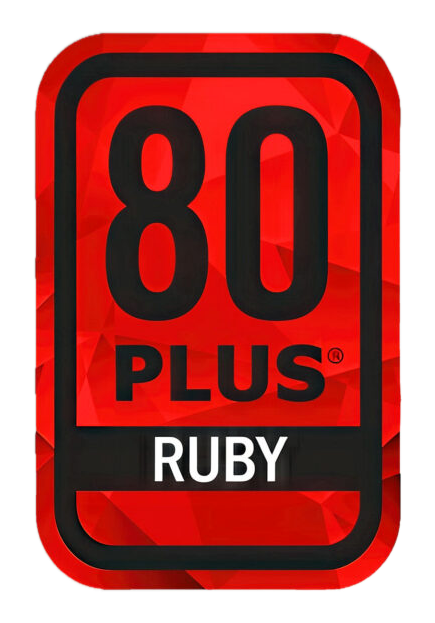 80 PLUS Ruby 80 PLUS Ruby | 85% | 91% | 93% PFC ≥ 0.95 | 95% | 91% |
| 80 PLUS Orzecznictwo | 230 V Wewnętrzny, nieredundantny | ||||
|---|---|---|---|---|---|
| 80 PLUS Orzecznictwo | 5% | 10% | 20% | 50% | 100% |
| 80 PLUS | - | - | 82% | 85% PFC ≥ 0.90 | 82% |
| 80 PLUS Brązowy | - | - | 85% | 88% PFC ≥ 0.90 | 85% |
| 80 PLUS Srebrny | - | - | 87% | 90% PFC ≥ 0.90 | 87% |
| 80 PLUS Gold | - | - | 90% | 92% PFC ≥ 0.90 | 89% |
| 80 PLUS Platinum | - | - | 92% | 94% PFC ≥ 0.95 | 90% |
| 80 PLUS Titanium | - | 90% | 93% PFC ≥ 0.95 | 95% | 91% |
| 80 PLUS Ruby | 85% | 91% | 94% PFC ≥ 0.95 | 96% | 92% |